Imagine if the US Gov't tried to shut me up. Or you. Or any blogger.
The "Stop Online Piracy Act" also known as SOPA is basically a rewrite of the Protect-IP Act. The embedded video gives a pretty good description of what it will do.
If you're at all like me, you have probably read at least a little about Google's struggles with China. You may even be familiar with the "Great Firewall of China". I'm seeing far too many parallels between this law and the very thing that the president himself is fighting against in his recent speech about the US military presence in Australia. We are trying to protect commercial interests here, which is a fine pursuit. The problem is that I fail to see just what makes it ok to tear down China's Firewall and replace it with our own, more comprehensive firewall that gives American corporations the power to shut down an American business on grounds of "inadequate copyright protection". Yes, China is making it difficult for it's citizens to access American websites, but it's not really able to stop them. There are always ways around that haven't been plugged up yet. The Chinese firewall is doing quite well as a training device for hackers and for (presumably) slowing internet service. We've already got plenty of hackers doing very simple work-arounds to get their hands on a few hours of media for free. What will happen if it becomes more difficult? It's not going to stop.
This is a very interesting situation. If we focus on the run of the mill consumer who may have a few bootlegs and other illegal downloads, I can set up an example that shows just how bad this can get. Currently, the set-up is simple. Very little work is required for a good payoff. Just download a p2p file sharing service and start searching for host sites with links to the content you want. It's not even as complicated as that description sounds. Just type in the name of whatever it is you're searching for (whether it's a song title, a band name, an entire genre, a movie, and actor, anything) and add the word "torrent" to the end of your search. The reason it's so easy is that some programmers decided that the method should be available, so they put it together. It worked, so other programmers improved it until it was readily available to anyone that looked for it. Under SOPA, the same thing happens. For a while, Joe Blow the regular guy might be forced to pay for his music. Chances are, he really doesn't want to and resents the new law that is taking down his favorite websites and services. It's not just the p2p programs and host sites that are in danger, it's YouTube, it's Facebook, it's Google as a whole that may be in danger. So after Joe Blow loses his file sharing capabilities, the hackers that started the whole thing to begin with, and all the others that improved or used the system go back to work. Making something illegal makes it a more appealing challenge than before. Pretty soon, a new system is in place. Joe Blow hears about it through a friend of a friend and he's happily downloading his music for free again, only this time he's getting it straight from the record companies that have hacked databases. Patches are automatically downloaded into his fancy new program every time the company closes a hole and the hackers find a new one. The whole process is more exciting, harder to track, and vastly more complex.
Better yet, if SOPA passes, this blog will be shut down. This blog will be shut down for my description of the p2p process, for hinting that hackers might be able to circumvent the law, and for encouraging civil disobedience. It will be shut down because these paragraphs are a threat to copyright holders of America. I will be forced to stop writing, maybe even arrested because I told you how to beat the man. I may go to JAIL because I told you that the man can't win this one, even if the law passes. I, and hundreds of other bloggers, thousands of websites, millions of people are in danger of losing our First Amendment Rights over a little money that we probably wouldn't spend anyway.
Censorship is un-fucking-american. Stop this bill NOW. If you didn't sign the petition that popped up when you loaded this page, please refresh the page and sign it now. There are also numerous other petitions going around the web which I may post here if it seems the bill is in danger of passing.
Thursday, November 17, 2011

Friday, November 4, 2011
Well, this is a little disappointing...
I haven't posted very recently. I'm lazy. I'm pretty ok with that most of the time. like right now. Because I'm winning the blog contest. That's right. winning. I don't even have to try. It's sad really, because I've had some great ideas for blog posts that I've just forgotten about because I've lost my motivation to post. My competitor hasn't even written one post, hasn't set up his blog or anything. Granted, he's got a good reason for it... he's actually working ten hours a day. when we started this contest, it was based on the fact that both of us had lots of free time to think about things and write out our thoughts. Now that's not the case. He's got a project to work on, and so do I. Both are projects other than blogging, so blog posts will occur less frequently I'm not even going to promote this post because really, it's almost entirely irrelevant to the rest of the blog. Also, since someone had decided it was a good idea to troll this blog (srsly, even with as few readers as I have, somebody wanted to troll), I have changed the comment section to disallow anonymous comments. While that does make it more difficult for my one legitimate anonymous commenter (pretty sure there's just one), it also saves me from having to delete the troll's comments. I'll have some more actual content ready for publication in a week or so. I'm in no hurry. After all, I'm winning this pitiful blog contest.
Monday, October 10, 2011
Experiments in Learning


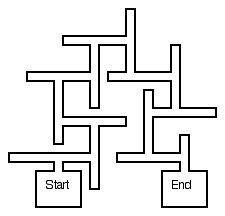
I should note here, that extinction and discrimination are an inhibitory design, where the conditioned stimulus is predictive of an absence of the unconditioned stimulus. Supposedly an inhibitory design cannot take place without prior associative conditioning. However, I have designed an experiment to test this (and was yelled at by students in class for contradicting the professor). My experiment isolates the effect without any prior associative conditioning. One would need a maze big enough to randomly place roughly one hundred reinforcements in two or three hundred different position. As a rat moves through the maze, it may discover these. It would be allowed to eat some of them (assuming the reinforcements are food) but upon discovering others, a buzzer would sound and the food would be taken away. If by the end of the test the rat ignores food when the buzzer sounds without having to actually remove the food, inhibitory conditioning will have taken place. Very simple, just requires a very large maze similar in design to the one below.
For more general cases of learning, some new research shows that attitudes toward learning are extremely influential on learning outcomes. Someone who believes learning is an acquisition of skills through error and effort will learn faster than someone in a fixed frame of mind. The complexities involved in self image and attitude are not explicitly addressed in the study but are implied as affecting learning outcomes in a greater proportion to what was commonly believed to be the case. One example if this relationship which I have written about before is how a single word choice can affect the attitude and thus the learning of an individual or class of students. If the teacher tells the class that they are about to cover the "hard" part of a subject, the students form an expectation that it will be difficult and are likely to react defensively to the presentation. That is, with an expected difficulty, the students exhibit a fear response which inhibits learning by causing them to dwell on each little aspect of it, questioning their understanding and overshadowing subsequent information with worries about previous information. On the other hand, if the teacher tells the students that they are approaching the "fun" part of a subject, the students will react with increased interest and anticipation of pleasurable experiences. The study finds that when a student is led to believe that their success is due to effort (one simple sentence of praise to this effect is enough), the students will rise to further challenges able to correct past mistakes and even excel at tasks designed for much older students, given the chance to learn from said mistakes. Those told that their success is a function of their intrinsic intelligence will avoid challenges in order to avoid mistakes altogether, ostensibly to appear smarter by percentage.
I would like to remind folks that if I am told that something is impossible, I will immediately set out to find a case to the contrary. Nearly anything presented in absolute terms can be proven innaccurate with a single counterexample. As such, I will take it as a personal challenge to find that exception. Don't follow the rules over a cliff.
Wednesday, October 5, 2011
More Classroom Frustrations
Today I was told in no uncertain terms that my questions are unwelcome in class. They're unwelcome because they represent a type of thinking that many of the other students are unwilling to do. I'm not sure what that means. I'm really confused about being told that these other students don't want to think for themselves, they want to absorb and regurgitate the material of the class. The Prof attempts to encourage thinking by asking these students to choose between opposing theories after presenting evidence that the theories are not opposed, but work together in different parts of the brain. This evidence is based on physiological studies that were not available at the time the opposed theories were originally formulated. While I understand the merits of asking students to distinguish between ideas and point out the strengths and weaknesses of each, the flaw in the method is that by presenting two choices as mutually exclusive and holistic (without any third theories available) the students are likely to neglect other options. Evidence of separate processes that follow the model set forth by both theories does nothing to help this; it only invites a rejection of sound scientific findings. It seems that once again my expectations and standards are laughably high. Intellectual discourse and critical thinking are frowned upon in upper division courses.

I am required to take this course, if I want to complete a degree in psychology at this university. I want to complete my degree. I have to stay at this university because it's affordable and I'm nearly finished anyway. That said, I will not drop the course as one student kindly pointed out I may do. Everyone in the course is paying for it, myself included. Thus arguments to the effect that they have rights to uninterrupted lecture because they are paying for it are moot. I am paying the college to provide me time to pick a particular professor's brain about a particular subject. That implies that I can reasonably expect an answer to questions I have about the course material. If the professor acknowledges my question and spends class time to answer, that is at her discretion. If the professor wishes to complete the lecture and discuss my question outside of class, that is also at her discretion. I am unaware of any rule that states I may not "interrupt" another's learning by asking a question. I also know of no rule that says the other students have the right to shout down both myself and the professor so that the professor will continue the lecture. At the same time, however, I don't know of any rule that says they can't. In addition to all of this, I am fully aware that there is no consensus concerning the value of my questions among the students. Some appreciate the depth added to the content, and others despise that I would even think to ask questions during a boring lecture. Because of these mixed signals, I am inclined to satisfy my own curiosity until such time as the professor takes control of the situation and decides that either I or the noisy students need to shut up. As long as the professor is answering my questions, I will not stop asking.


In higher learning institutions, I expected to find attitudes more encouraging of self-challenge and deeper understanding of topics. I was led to believe that the antics of high school were to be left behind in high school so that those interested in learning a topic in depth could be free to do so. Apparently, that belief is wrong, at least in the case of the institution I am now attending. I am continually told to go somewhere else to find the quality of learning I am looking for while simultaneously I am to believe that the education I am paying for is effectively preparing me for even higher learning of more specific types of knowledge. How can I reasonably expect to be prepared for things which are actively discouraged (mostly by other students)? I am treated as a miscreant for thinking in ways I was led to believe were encouraged in upper division courses, especially in the sciences. How can I reconcile these beliefs? Which walls do I tear down to strengthen this feeble house of cards? If I allow myself to slip into passivity I relinquish hope of becoming and effective researcher. If I continue to antagonize the other students I risk ostracism, poor grades, and even violence if other's views are taken to extremes. I would prefer not to risk my grade, but I seem to do so in both cases for I have discovered that my most effective means of learning is taking an active role in class. Another self discovery is that if I don't take care of ideas as I have them, they become forgotten. Often these ideas are irrecoverable or irrelevant upon remembrance. Contrary to popular belief, if my assessment of it is correct, I am a very considerate person and would prefer not to disrupt the learning of others. At the same time, how can I be expected to disrupt my own optimal learning pattern? I firmly believe that the questions I ask in classes are mirrors of questions that other students do not voice or have otherwise not thought of, which enhances the learning of those around me. I have specific examples of evidence to support this belief. At the same time, some students which have a hard time digesting the class material are clearly further confused by my inquiries into more complex areas. Thus I am torn between continuing as I am to enhance my own and other's learning or ceasing my active role in class to accede to the demands of the vocal objectors to my activity. Once again, given the more or less balanced nature of the options, I am forced to conclude that it is better for me to act in my own interest rather than throw in the towel. I am willing to fight for my own edification, even if others are not willing to take charge of their own.
Sunday, September 25, 2011
Weekends... and Self Improvement.

According to Wikipedia (for some light research into the topic), the Amalgamated Clothing Workers of America demanded and received a five day work week in 1929. Nationwide, the weekend wasn't fully integrated until 1940. Wikipedia says these claims need citation. According to Weekend America, even the word 'weekend' didn't exist until the 1870s. (Weekend America confirms Wikipedia's assertions) The weekend started at first to give workers time to attend worship services and spend time with their families. Sunday was easy to grant, given the large percentage of Christians; Saturdays were harder, given the lower percentage of Jews. As Weekend America points out, if the Jew's religious observance occurred on Wednesday, we would have had Wednesday off and there would be no two-day weekend.

There is absolutely no reason to feel entitled to a weekend, or even for that matter to feel obligated to enjoy them. That isn't to say that we shouldn't enjoy our weekends, but we shouldn't enjoy them any more than any other day. Beyond our little social circle of life, the earth turns and shows a particular point to the sun on a fairly regular basis. The sun won't shine any brighter on a weekend than it does during the week. As far as business is concerned, the importance of the weekend is fading as workers begin to leave behind religious traditions of weekly worship. When I was young, even restaurants were closed on Sundays; now it is difficult for waitresses to schedule two days off in a row. Other types of business, with less open to the public front end operations, still close on weekends as long as it is convenient for them to do so. Those workers that make sure to take religious leave on days of worship are gladly supplanted by those who don't. And still the entitlement to a weekend persists.
The feeling of obligation to enjoy a weekend can be taxing in the same way that trying too hard to enjoy a vacation can be. There is potential for anxiety and guilt associated with doing "weekend things". If you don't do those "weekend things" during the weekend, you have to wait until next weekend. You may miss the opportunity to take advantage of nice weather by going outside to enjoy your activity of choice, especially if you planned something like a movie marathon or video game tournament. Your picnic plans may be ruined by bad weather. Any number of unexpected events may upset the plans you had for your special two days.
I personally am an example of what can happen when the sense of entitlement to free time and especially weekends goes too far. I go to school during the day, work hard while I'm there, and resent any intrusions into my freedom after school hours have ended. At work it is easy to work hard but, my chores have been piling up for months now because I feel a need to do things for myself that I am interested in doing. I feel that somehow, writing this blog will be more satisfying than having clean dishes. Reading trumps laundry. Guitar practice beats out dusting. I get by on the bare minimum of chores because I have designated all time outside of work and school as mine. Indeed, I have been encouraged to believe that through subtle and sometimes unsubtle appeals of media, friends, and my own pleasure seeking self. This is an extreme case, surely, but one that inevitably demonstrates that entitlement to free time and relaxation can become a very ugly scene.
There must be a way to escape this. I have to change my thinking about the week and weekends in order to change my feelings and behaviors. I have to remember that all days are no more than the turning of the earth. I have the weekend to use at my discretion because of a tradition started by workers unions little more than one hundred years ago. I have every moment to choose how I use my time, not just on the weekends, but all the time. I can choose to skip class for a bike ride. I can choose to use a cloudy day for chores. I can choose to impose a work schedule on myself that fills the gaps in my obligations to others with obligations to myself. Above all else, I can choose to enjoy my week. The weekend shall nevermore hold sway over me. That up and down cycle can become a passage of pleasant days. I enjoy good work, why not enjoy more of it? I can turn my life into a project, so that every moment I am thinking of how to improve myself and enjoy doing it. I can turn my energy to productive goals, and increase the level of standard upkeep along the way. I must make myself see that it will be a slow process. I have a lot of catching up to do, after all.
I hope that more than myself will be able to see what I am seeing now and hope to continue seeing in the future. Every day is a day to be treasured, to be enjoyed, to be experienced, and to be utilized for the betterment of the self. I had known this before, but thought it to suffice to expand my mind with my free time. That's silly. Time isn't free. It shouldn't matter what day of the week it is, or what we do during that day, as long as it is progressive. Work, play, studies, creative expression, all are experiences that can fill our time. It's time to stop taking our weekends for granted. Simply because traditions says we don't have to go to work, doesn't mean we shouldn't spend the time working.
Tuesday, September 20, 2011
Such a Sad, Soggy Science
I'm very disappointed in my chosen field right now. I finally figured out why psychology is not only a soft science but is openly ridiculed by other fields and laymen alike. Some of the wishy-washy approximated studies present their findings as absolute fact... to the point of utter silliness. Psychologists use mathematical terms to describe non-mathematical relationships and then wonder why they get funny looks. The graphs are not graphs. The math is not math. The math that's supposed to describe the graph doesn't. Some of the terminology is mixed up into an approximation of meaning that the other sciences have pinned down -- dare I say it? -- to a science.

Up until this point, my profs and so-on have been pretty good at pointing out when a theory or line of research turned out to be utter bullshit. The higher I get in the curriculum, the harder it is to distinguish the diamonds from the rough... and instead of helping us poor students out with it; they just present the whole schmear as easily proven scientific fact. Well, I hate to break it to you high and mighty Nobel Laureate Ph.D.s, that's not how science works. When there's ambiguity, you must state the ambiguity. When there is no set pattern, just a suggestion of a trend, you must state that it requires further research to determine exact relationships... and an admission that those relationships may not be general, but specific to the test group. If I hadn't had any taste of harder science, if I was ignorant of the methods of psychological research, I might be duped into believing things that aren't even self-consistent.
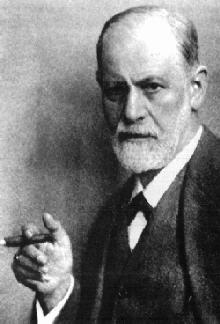
For all you folks out there that aren't familiar with the science, I can use Sigmund Freud as a beautiful example of what I'm talking about. I'll state it clearly: Freud’s theories have been proven wrong. They are Incorrect. Outdated. The methods he used to collect data were flawed in very basic ways and his subjects were not normal in any sense of the word. As far as we can tell without better data from the times, his test group was not only far too small to be representative of the population, but restricted to 12 sexually repressed Victorian age nymphomaniacs. That is not to say that his theories were without merit, for some of the general concepts he provided are still very useful in the study of psychology today. It's just that the conclusions he drew from his research were invalid and over-reaching. Yet, despite knowing for I don't know how long that Freud was wrong, psychoanalytics persisted for about 60 years.
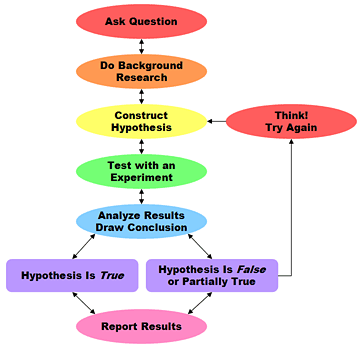
Research is a powerful force in the world. Without it we would not have any of the technologies leading up to the computers allowing me to post this blog. There is a pretty simple and generally agreed upon method for doing research that shows a causational relationship between two variables. Here's the scientific method if you needed a refresher. I like the little backward loop on that flow chart; it shows a part of research that happens behind the scenes that really makes it all worthwhile. See, people don't like to publish papers about scientists being kinda right and kinda wrong with no clear distinction. So, the way we fix it (and strengthen the scientific merit of the paper), is by looking at what we found in the data, picking out the interesting parts, and repeating the whole experiment just for that part. In that way, we can either thoroughly confirm a new concept, or totally throw it out. In psychology in particular, this is useful because sometimes the statistical analysis of an experiment can show flaws in our method that muddy the results. By repeating the process and elimination the inconsistencies of our method we can get better results. That's not to say that well done research can ever be perfect. We don't have the time or resources to do a complete study that undeniably proves anything, but we can get to a point where we are pretty sure. Of course, we need to state that we are only pretty sure and not completely sure. Often, research will create more questions than it answers. More questions mean job security for dedicated researchers (hint hint). The chart shown above is not the only qualifications for good research, but a part of the multitude of things that drives the research process. The specific experimental parameters are also very important. The project guide link I have is for a school sponsored science fair, but the general concepts are pretty good. Note that I don't say that they are exactly right, just pretty good.
The saddest thing about all of this is that most of the silly stuff would be very easy to eliminate. All that needs to be done is for anyone teaching psychology to stick to solid research, hedge bets with disclaimers of inaccuracy, and generally stop claiming to know the absolute truth of anything. Oh, and use scientific terminology the same way the other sciences do. Seriously. You may not think it matters much, but if you can sling the lingo so everyone else understands it, you make yourself look smarter, not dumber. Make up your own words if you need to, but for things already decided, don't go fiddling around with it. Easy.
Monday, September 19, 2011
Big Announcement! Battle is Joined!
A gun fires the signal to start, the contestants are out of the gates in a rush, the crowds roar with excitement... no, this isn't a horse race, it's a blog contest!
Last week my friend Jon was thinking about all the stuff he'd been doing, all the stuff I'm doing and what we could both do better. I think he's been wanting to write for quite some time, but hadn't found a topic to write about or a place to write it. He sent me a message on Skype: "You and I should have a blog off! That might actually modivate both of us to become better bloggers" and so it began.
The rules: After discussing what a fair and reliable metric would be, we decided to use daily views averaged over a week and tallied monthly to measure our progress. If that sounds confusing, don't worry about it, we'll be keeping track ourselves. We've got October to start building a following and we'll be measuring monthly starting November 14th. If either one of us quits writing after a decisive win and loses viewers, the win is forfeited. We'll also be cross linking and coordinating some of our posts to boost our total audience.
How you can help: Just keep reading. Tell your friends, write comments, join in the discussion, send me ideas, ask me to research things and keep coming back. The more you demand of me, the more I will deliver. Share my writing on Facebook, on twitter, on Google +, whatever you use. I have links to help you do that on each of my posts. If some part of my blog isn't working, let me know so I can fix it. I want to win, of course, and the way I'll do that is with you're help.
My first entry: The ideas behind this contest are actually pretty interesting. To fix a motivation in the mind to continue to perform a certain action (blog posting) on a more regular and frequent basis we set up a reward for success, and an accountability program to measure that success. Here, the anticipation of a reward (kudos, bragging rights, more followers, beating Jon at something) will be used as my drive and energy to complete the task set before me and build the habit of writing more regular updates to this currently pitiful blog. The writing will hopefully improve as a result of scrutiny, or at least not backslide. The topics will hopefully be more accessible to a wider audience, though no less biting. During this exercise, which I hope will last years, I will try to exercise increasing amounts of self control to post entries more often and more regularly to please my audience.
For now, the reward is purely anticipatory, though as the contest continues it should become a learned association between writing blogs and winning bragging rights and readers. Having intellectually set the parameters of the contest, both of us participants await the benefits from classically conditioning ourselves to better behaviours. To those of my readers unfamiliar with classical conditioning, it was first formally observed by Ivan Pavlov when he trained his dogs to salivate to the ringing of a bell. I will compare the current design to his: The unconditioned stimulus presented to the dogs was a bit of meat or meat powder. For this contest, the stimulus is recognition. The unconditioned response to the presentation of that meat was salivation. For the contest, the response is pride or happiness. The unconditioned stimulus was then paired with a neutral stimulus, a bell, by presenting them together and observing the response of salivation. Our neutral stimulus is blog posting, which is paired by the artificial recognition in addition to the generated recognition of our audience as it grows. After a while, the bell can produce salivation without the meat. Soon, I hope to enjoy posting regular blogs whether anyone reads them or not.
In addition to the classical conditioning, we'll use a feedback loop to gauge performance. The number of viewers a post receives initially will show how relevant or immediately interesting a topic is. The number of viewers a post continues to get will show how much it resonates with the audience. The month to month analysis of results also serves as a feedback loop because it is on going and allows us to gauge personal performance in comparison to another. Basically, The feedback loop will encourage both Jon and I to alter our blogging tactics to attract more readers.
I can go a bit further along this topic of motivation and needs. I can reference Maslow's Hierarchy and where the blogging fits into it. Maslow's Hierarchy, in short is a list of needs that must be accomplished in order. Once one is fulfilled, a person can move along to the next until a more basic need must be re-fulfilled.
 This blog post and contest can work toward all three of the upper tiered needs. It works toward love and belonging by putting ideas out there that friends and family may find interesting in one way or another and thus promote closeness. It builds esteem by soliciting favorable responses from others, whether I know them personally or not. It promotes my self-concept and encourages a growth in respect and other social standing. Trolls, though they will be deleted, may also serve as a measure of success as they mostly target highly public Internet venues. Finally, this blog and contest build my self-actualization in that I am allowed to be creative, be spontaneous, and solve problems. Any other parts of this that people read into it are probably relevant, but I will not claim them specifically here.
Finally: I'll wrap up this post by thanking Jon for the wonderful idea. We were going to share links to each other on this first post but he isn't quite ready and thought to distract me with a puzzle. The jumble of characters below is actually a puzzle that he made. I asked him if it would be appropriate for me to share it with my audience and he told me it would be. Anyone cracking the puzzle may be offered some small prize I haven't decided on yet. Post answers in the comments and expect a later post to announce the first correct solution and an actual link to the competing blog, like I originally planned to include here.
/9j/4AAQSkZJRgABAQEAYABgAAD/2wBDAAcFBQYFBAcGBQYIBwcIChELCgkJChUPEAwRGBUaGRgVGBcbHichGx0lHRcYIi4iJSgpKywrGiAvMy8qMicqKyr/2wBDAQcICAoJChQLCxQqHBgcKioqKioqKioqKioqKioqKioqKioqKioqKioqKioqKioqKioqKioqKioqKioqKioqKir/wAARCABAAEADASIAAhEBAxEB/8QAHwAAAQUBAQEBAQEAAAAAAAAAAAECAwQFBgcICQoL/8QAtRAAAgEDAwIEAwUFBAQAAAF9AQIDAAQRBRIhMUEGE1FhByJxFDKBkaEII0KxwRVS0fAkM2JyggkKFhcYGRolJicoKSo0NTY3ODk6Q0RFRkdISUpTVFVWV1hZWmNkZWZnaGlqc3R1dnd4eXqDhIWGh4iJipKTlJWWl5iZmqKjpKWmp6ipqrKztLW2t7i5usLDxMXGx8jJytLT1NXW19jZ2uHi4+Tl5ufo6erx8vP09fb3+Pn6/8QAHwEAAwEBAQEBAQEBAQAAAAAAAAECAwQFBgcICQoL/8QAtREAAgECBAQDBAcFBAQAAQJ3AAECAxEEBSExBhJBUQdhcRMiMoEIFEKRobHBCSMzUvAVYnLRChYkNOEl8RcYGRomJygpKjU2Nzg5OkNERUZHSElKU1RVVldYWVpjZGVmZ2hpanN0dXZ3eHl6goOEhYaHiImKkpOUlZaXmJmaoqOkpaanqKmqsrO0tba3uLm6wsPExcbHyMnK0tPU1dbX2Nna4uPk5ebn6Onq8vP09fb3+Pn6/9oADAMBAAIRAxEAPwD5vxS4p/lMfujd9Dmm4IPNIAqxbj/R7hv9gD/x4VXxWvomnSanHfW8AJkW3MqgDrtIOPyzUyaSuwMuKF5pVjiRndjhVUZJNdL/AMK911bP7RLAkfGdjP8AN+Vdx8N/Bn9nH+1dWiH2h48wRsPuA9/rXT6vL5YcSYUKMnNeVicfKE+WmaU4qTPn6W3ltbgxToUdTyDV6DpWh4q8t7wyKBkNWZbngV3xnzwUmTJWdjOBIPFSrMTxIokX0PX86dYWNxqV7HaWUTSzSttVV716VpfwnSFUl1m63N1MMXQexNFavTpfGxWZx+n+E7vV44ZtMZJIpG2tuODGfQ16f4a8J2XhuFnVTcXLrtknPAx3AHpW7p+m2WlWqxWcKQxKP4R+v41ZKJIADIR1yB2rx8Ri5z0jsTZsrG7MEyupBC4xGT1FYXjDxFBLLPKkIjVlAA3bhmti5tHypY7GU5BHNed+M4TEnlA/OmZJWP8ADnoKxoNVJqDNYprVHF6pdG4nJJ6nNNtW4FVZmJkOTUts3OK+hUbRsQ3dnafCOa1g8R3MlxjzPIIiJ7ZPNew/2jpqwMl2mWY4WQPjH4V8zWN9Pp92lzauUkTofWurX4gTNEvmREOOpB4rzMZgqlSr7SBvTnBRtI9euLyC3JVnBQg4J/rVi22XTZjeFNi5Mpk+V8Dseua8Sm8ZSXJAl3kA560tp4knZWFmzpIzcBRkge2ax+oz5bMhcrl5HuN/eWVtaSyZlnuQMRhIvkz9a8f8cXMmYIyxEko82QH1PT8h/OqsfiHVWgkju98iuTh5CxZT7c1j6ncT3dyZZnMmAEDHqQBgfyrfDYRUpc17s1nNcvKlYx2Jyc9akgbElNmXa+fWmocOK9bdHKRV1lx8NvEkNzBaw20N5dyxea1tbTq8sI2q2HXOQcOvHfNcnXX2/wAU/GFpJHJBqoWSOIQh/s8ZYgbcEnbyfkUZPOAKoCpH4C8SHU7CwuNNktZtRR3tvtBCrIFTeefpg/iK3vCPgrW10iLxELEzafNt8uRG5J83ytv13Hp6c1gT+P8AxLc31leTakzT2O77O/lp8m5AjducqoHPpWz4B8X65FqNlpMWoyR2kSkRRhFIXD+YOoOfm5qZ25XccW09Dp5tCvlvoxNp0kMPni22SDrK3IXPbIIOfSsnU/C+p3C3LWemSvHBcG3d0TKiTcFxn6kDPuPWuk1PV9Ru5YVuZ3llil8+NxGgYOABuyF9FXrxwKq3HizxBCzeVqBjaScT4EEagyZB3YC4ySoJ9cc1yRlTvYbm2zmovhV4jvYIhLHa2U0t0baKG6nCO77Q3A5yMMvPvnpzXBzRvBcPFJjfGxVsHIyDjrXoera34gv7pbifVBJNCXYbo14LRrGeAv8AcVR+FeeTxNBO8bdVOK6YSi9ib3P/2Q==
Last week my friend Jon was thinking about all the stuff he'd been doing, all the stuff I'm doing and what we could both do better. I think he's been wanting to write for quite some time, but hadn't found a topic to write about or a place to write it. He sent me a message on Skype: "You and I should have a blog off! That might actually modivate both of us to become better bloggers" and so it began.
The rules: After discussing what a fair and reliable metric would be, we decided to use daily views averaged over a week and tallied monthly to measure our progress. If that sounds confusing, don't worry about it, we'll be keeping track ourselves. We've got October to start building a following and we'll be measuring monthly starting November 14th. If either one of us quits writing after a decisive win and loses viewers, the win is forfeited. We'll also be cross linking and coordinating some of our posts to boost our total audience.
How you can help: Just keep reading. Tell your friends, write comments, join in the discussion, send me ideas, ask me to research things and keep coming back. The more you demand of me, the more I will deliver. Share my writing on Facebook, on twitter, on Google +, whatever you use. I have links to help you do that on each of my posts. If some part of my blog isn't working, let me know so I can fix it. I want to win, of course, and the way I'll do that is with you're help.
My first entry: The ideas behind this contest are actually pretty interesting. To fix a motivation in the mind to continue to perform a certain action (blog posting) on a more regular and frequent basis we set up a reward for success, and an accountability program to measure that success. Here, the anticipation of a reward (kudos, bragging rights, more followers, beating Jon at something) will be used as my drive and energy to complete the task set before me and build the habit of writing more regular updates to this currently pitiful blog. The writing will hopefully improve as a result of scrutiny, or at least not backslide. The topics will hopefully be more accessible to a wider audience, though no less biting. During this exercise, which I hope will last years, I will try to exercise increasing amounts of self control to post entries more often and more regularly to please my audience.
For now, the reward is purely anticipatory, though as the contest continues it should become a learned association between writing blogs and winning bragging rights and readers. Having intellectually set the parameters of the contest, both of us participants await the benefits from classically conditioning ourselves to better behaviours. To those of my readers unfamiliar with classical conditioning, it was first formally observed by Ivan Pavlov when he trained his dogs to salivate to the ringing of a bell. I will compare the current design to his: The unconditioned stimulus presented to the dogs was a bit of meat or meat powder. For this contest, the stimulus is recognition. The unconditioned response to the presentation of that meat was salivation. For the contest, the response is pride or happiness. The unconditioned stimulus was then paired with a neutral stimulus, a bell, by presenting them together and observing the response of salivation. Our neutral stimulus is blog posting, which is paired by the artificial recognition in addition to the generated recognition of our audience as it grows. After a while, the bell can produce salivation without the meat. Soon, I hope to enjoy posting regular blogs whether anyone reads them or not.
In addition to the classical conditioning, we'll use a feedback loop to gauge performance. The number of viewers a post receives initially will show how relevant or immediately interesting a topic is. The number of viewers a post continues to get will show how much it resonates with the audience. The month to month analysis of results also serves as a feedback loop because it is on going and allows us to gauge personal performance in comparison to another. Basically, The feedback loop will encourage both Jon and I to alter our blogging tactics to attract more readers.
I can go a bit further along this topic of motivation and needs. I can reference Maslow's Hierarchy and where the blogging fits into it. Maslow's Hierarchy, in short is a list of needs that must be accomplished in order. Once one is fulfilled, a person can move along to the next until a more basic need must be re-fulfilled.

Finally: I'll wrap up this post by thanking Jon for the wonderful idea. We were going to share links to each other on this first post but he isn't quite ready and thought to distract me with a puzzle. The jumble of characters below is actually a puzzle that he made. I asked him if it would be appropriate for me to share it with my audience and he told me it would be. Anyone cracking the puzzle may be offered some small prize I haven't decided on yet. Post answers in the comments and expect a later post to announce the first correct solution and an actual link to the competing blog, like I originally planned to include here.
/9j/4AAQSkZJRgABAQEAYABgAAD/2wBDAAcFBQYFBAcGBQYIBwcIChELCgkJChUPEAwRGBUaGRgVGBcbHichGx0lHRcYIi4iJSgpKywrGiAvMy8qMicqKyr/2wBDAQcICAoJChQLCxQqHBgcKioqKioqKioqKioqKioqKioqKioqKioqKioqKioqKioqKioqKioqKioqKioqKioqKir/wAARCABAAEADASIAAhEBAxEB/8QAHwAAAQUBAQEBAQEAAAAAAAAAAAECAwQFBgcICQoL/8QAtRAAAgEDAwIEAwUFBAQAAAF9AQIDAAQRBRIhMUEGE1FhByJxFDKBkaEII0KxwRVS0fAkM2JyggkKFhcYGRolJicoKSo0NTY3ODk6Q0RFRkdISUpTVFVWV1hZWmNkZWZnaGlqc3R1dnd4eXqDhIWGh4iJipKTlJWWl5iZmqKjpKWmp6ipqrKztLW2t7i5usLDxMXGx8jJytLT1NXW19jZ2uHi4+Tl5ufo6erx8vP09fb3+Pn6/8QAHwEAAwEBAQEBAQEBAQAAAAAAAAECAwQFBgcICQoL/8QAtREAAgECBAQDBAcFBAQAAQJ3AAECAxEEBSExBhJBUQdhcRMiMoEIFEKRobHBCSMzUvAVYnLRChYkNOEl8RcYGRomJygpKjU2Nzg5OkNERUZHSElKU1RVVldYWVpjZGVmZ2hpanN0dXZ3eHl6goOEhYaHiImKkpOUlZaXmJmaoqOkpaanqKmqsrO0tba3uLm6wsPExcbHyMnK0tPU1dbX2Nna4uPk5ebn6Onq8vP09fb3+Pn6/9oADAMBAAIRAxEAPwD5vxS4p/lMfujd9Dmm4IPNIAqxbj/R7hv9gD/x4VXxWvomnSanHfW8AJkW3MqgDrtIOPyzUyaSuwMuKF5pVjiRndjhVUZJNdL/AMK911bP7RLAkfGdjP8AN+Vdx8N/Bn9nH+1dWiH2h48wRsPuA9/rXT6vL5YcSYUKMnNeVicfKE+WmaU4qTPn6W3ltbgxToUdTyDV6DpWh4q8t7wyKBkNWZbngV3xnzwUmTJWdjOBIPFSrMTxIokX0PX86dYWNxqV7HaWUTSzSttVV716VpfwnSFUl1m63N1MMXQexNFavTpfGxWZx+n+E7vV44ZtMZJIpG2tuODGfQ16f4a8J2XhuFnVTcXLrtknPAx3AHpW7p+m2WlWqxWcKQxKP4R+v41ZKJIADIR1yB2rx8Ri5z0jsTZsrG7MEyupBC4xGT1FYXjDxFBLLPKkIjVlAA3bhmti5tHypY7GU5BHNed+M4TEnlA/OmZJWP8ADnoKxoNVJqDNYprVHF6pdG4nJJ6nNNtW4FVZmJkOTUts3OK+hUbRsQ3dnafCOa1g8R3MlxjzPIIiJ7ZPNew/2jpqwMl2mWY4WQPjH4V8zWN9Pp92lzauUkTofWurX4gTNEvmREOOpB4rzMZgqlSr7SBvTnBRtI9euLyC3JVnBQg4J/rVi22XTZjeFNi5Mpk+V8Dseua8Sm8ZSXJAl3kA560tp4knZWFmzpIzcBRkge2ax+oz5bMhcrl5HuN/eWVtaSyZlnuQMRhIvkz9a8f8cXMmYIyxEko82QH1PT8h/OqsfiHVWgkju98iuTh5CxZT7c1j6ncT3dyZZnMmAEDHqQBgfyrfDYRUpc17s1nNcvKlYx2Jyc9akgbElNmXa+fWmocOK9bdHKRV1lx8NvEkNzBaw20N5dyxea1tbTq8sI2q2HXOQcOvHfNcnXX2/wAU/GFpJHJBqoWSOIQh/s8ZYgbcEnbyfkUZPOAKoCpH4C8SHU7CwuNNktZtRR3tvtBCrIFTeefpg/iK3vCPgrW10iLxELEzafNt8uRG5J83ytv13Hp6c1gT+P8AxLc31leTakzT2O77O/lp8m5AjducqoHPpWz4B8X65FqNlpMWoyR2kSkRRhFIXD+YOoOfm5qZ25XccW09Dp5tCvlvoxNp0kMPni22SDrK3IXPbIIOfSsnU/C+p3C3LWemSvHBcG3d0TKiTcFxn6kDPuPWuk1PV9Ru5YVuZ3llil8+NxGgYOABuyF9FXrxwKq3HizxBCzeVqBjaScT4EEagyZB3YC4ySoJ9cc1yRlTvYbm2zmovhV4jvYIhLHa2U0t0baKG6nCO77Q3A5yMMvPvnpzXBzRvBcPFJjfGxVsHIyDjrXoera34gv7pbifVBJNCXYbo14LRrGeAv8AcVR+FeeTxNBO8bdVOK6YSi9ib3P/2Q==
Subscribe to:
Posts (Atom)